
Get a Free Quote

What To Do If Your Air Conditioner Is Leaking or Dripping Water? Common Causes and Solutions

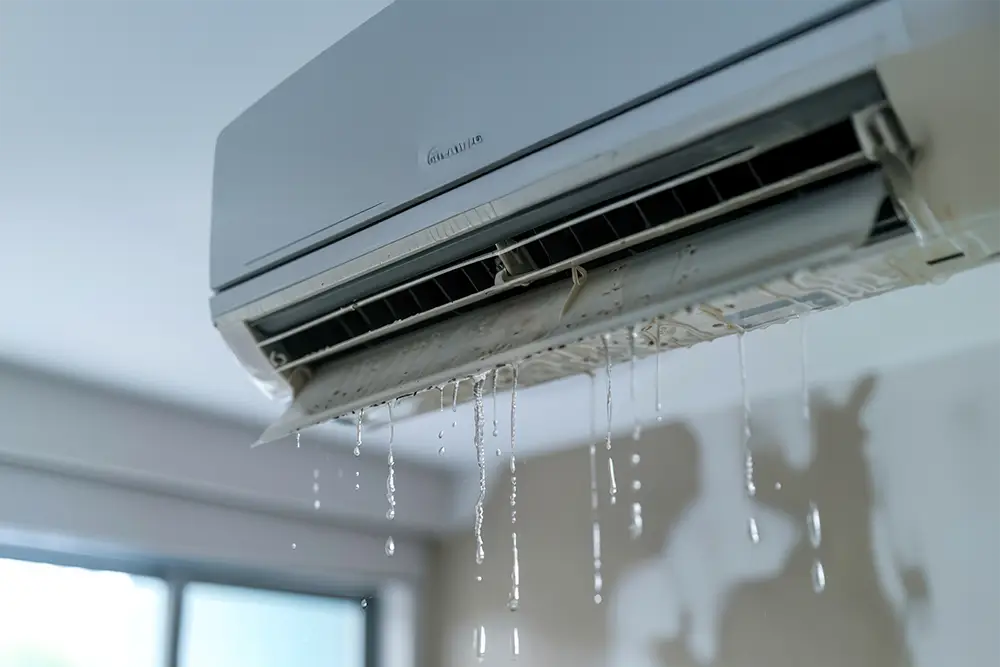
Picture this: It’s a hot day, and you step into your home or office, only to find a puddle of water under your AC unit. Instead of relaxing in the cool temperature, you now have to worry about fixing your air conditioner.
If you don’t get it fixed, it can damage your walls, furniture, etc, and ruin your days ahead. Water leakage is a common problem in air conditioners, but it does not mean that you can ignore it.
Whether you are a homeowner, business owner, or have a large industrial space with ACs in it, most of the time, a leaking air conditioner can be fixed. But it is important to understand what causes this leak and the solutions available to fix it.
In this blog, you will know why your ACs leak water and what you can do about it, so keep reading to avoid this problem in your air conditioning units.

Why Is Your Air Conditioner Leaking or Dripping Water?

The first thing you need to know is that your air conditioner produces water because it cools the indoor air through various AC components. One of these parts includes the evaporator coil, which becomes warm as the air is condensed.
This creates moisture around the coils and then slowly drips into a pan in your AC called a drain pan, which is connected to the drain line. Normally, the drain line should clear out these water drips, but a problem like water leakage may happen when there is something wrong with this process.
Let’s see what might be the causes for this AC leakage problem:

1. Dirty Air Filters

The air filters in your AC might be filled with dirt and dust. When this happens, the airflow will be blocked, so it doesn’t reach the evaporator coil. The extra water will accumulate in the drain pan and cause a leak.

Solution:

  • Check your AC air filters once every 30 days.
  • Replace air filters at least every 3 months (or more if you live in a dusty area or have pets).
  • Wash reusable air filters to prevent leaks

2. Frozen Evaporator Coils

The evaporator coils in your AC can get frozen because of issues like low refrigerant levels, dirty air filters, blocked vents, etc. When the frozen coils start to melt, it causes more water to come into the drain pan, which causes the leaks.

Solution:

  • Switch off your AC
  • Let the frozen coils thaw out
  • Check for blockages in the drain line or dirty air filters, then remove the blockage and let the air flow clearly.

3.Incorrect Installation

If you have a split system AC installed in your home or office space, water leakage can happen when the unit itself is placed incorrectly or on a slope. When this happens, your indoor AC unit is not leveled, so water can collect inside it and overflow instead of draining out.

Switch off the air conditioner before checking the drain line. Look for visible blockages, algae, or dirt around the outlet. Avoid forcing objects into the pipe. Persistent blockages should be cleared by a qualified technician to prevent further water damage.

Solution:

  • First, use a level tool to check if your air conditioner is placed correctly.
  • If the AC unit is not leveled, make sure to align it correctly.

4. High Humidity

Humidity levels during summer or monsoon seasons can also affect your AC’s water leakage problem. This is because your air conditioner generates more condensation than usual, especially if it is installed in commercial premises. The drain systems will be overloaded and cause leaks.

Solution:

  • Place another drain pan to prevent water overflow
  • Regularly check the drain pan

5. Damaged Drain Pan

For aged AC systems, the drain pan can become damaged and has a high chance of becoming rusted or broken, leading to water leaks.

Solution:

  • Inspect the drain pan for cracks or rust, and replace it immediately if it is damaged.
  • Waterproof sealants can be used, but replacement is the best way.

6. Low Refrigerant Levels

Your AC cannot cool properly without enough refrigerant. This can also cause the evaporator coils to freeze, so water leaks are very common when the evaporator coil thaws.

Solution:

  • If you notice that the cooling has reduced, the refrigerant needs a refill.
  • Always call a professional to refill the refrigerant in your AC.

7. Condensate Pump Issue

If one of your AC units is installed in lower spaces like a basement, it uses a condensate pump to remove the water. A broken condensate pump or any other issues with this pump will lead to water leakage.

Solution:

  • Listen closely if there are any strange noises or a silent condensate pump.
  • Test the pump by pouring water into the drain pan to see if it is working.
  • Replace or repair the pump in case of any issues.

Water Leaking From the Indoor Unit

Why the Indoor Unit Leaks More Than the Outdoor Unit

The indoor unit produces condensation as warm air passes over the cold evaporator coil. If drainage is restricted, water can collect inside the unit and eventually overflow, causing visible leaks around ceilings, walls, furniture, or flooring.

How to Check and Clear the Indoor Unit's Drain Line

Switch off the air conditioner before checking the drain line. Look for visible blockages, algae, or dirt around the outlet. Avoid forcing objects into the pipe. Persistent blockages should be cleared by a qualified technician to prevent further water damage.

Water Leaking From a Window, Portable, or Apartment Air Conditioner

Window Air Conditioner Leaking Water

Window air conditioners can leak when they are incorrectly positioned, causing condensation to flow indoors instead of outside. Blocked drainage, dirty filters, or excessive moisture can also contribute. Check the unit’s positioning and drainage before arranging professional assistance.

Portable Air Conditioner Leaking Water

Portable air conditioners collect moisture during operation, particularly in humid conditions. A full condensate tank, blocked drain hose, or incorrect hose positioning can cause water to escape. Empty the tank, inspect drainage connections, and follow the manufacturer’s instructions carefully.

What to Do If You're Renting and Your Air Conditioner Leaks

If you are renting, document the leak with photographs and notify your property manager or landlord promptly. Avoid dismantling the unit or attempting complex repairs yourself, as this could cause additional damage or affect maintenance responsibilities.

When to Call A Professional AC Technician

  • Water is leaking continuously despite the fixes.
  • If there is a low refrigerant level.
  • The AC is making very unusual noises or is not cooling as well as it used to.
  • Your air conditioner is a decade old and has not been serviced properly.

Need an Air Conditioning Technician in Tamworth

Water leaking from your air conditioner? Our licensed Tamworth technicians diagnose and fix the problem on a fast call today.
Request a Callback

Conclusion

In conclusion, if your AC is leaking water, it happens more commonly than you think. There can be several reasons why your AC is leaking water, but you can do something to prevent the leak, like using a towel or bucket to catch the water, checking the air filters and drain pans or lines regularly, and cleaning them gently. Always call a professional if you are not sure about the exact problem of your AC leakage.

Frequently Asked Questions

A leaking air conditioner usually indicates a drainage or condensation problem. AirFreeze identifies blocked drain lines, dirty filters, frozen evaporator coils, incorrect installation, damaged drain pans, high humidity, low refrigerant, and condensate pump issues as possible causes.

Air conditioners naturally produce condensation while cooling indoor air. This moisture normally collects in the drain pan and leaves through the drain line. Dripping or leaking occurs when drainage is restricted, components are damaged, or excess condensation overwhelms the system.

Yes, an air conditioner may continue cooling while leaking water, particularly when drainage problems develop. However, reduced cooling alongside leakage can indicate frozen coils or low refrigerant, which should be professionally inspected to prevent further system problems.

It is better to switch off an air conditioner that is leaking continuously, especially when water reaches electrical components, walls, furniture, or flooring. We recommend professional assistance when leakage persists or cooling performance changes.

Dripping can describe normal condensation leaving the system through its intended drainage path. Leaking generally means water is escaping somewhere it should not, often because of drainage blockages, damaged components, installation issues, or excessive condensation.


Picture of Veer Pratap
Veer Pratap

CEO / Director (Refrigeration A/C Supervisor, Electrician)

Table of Contents

Share via

Scroll to Top