Contact Us

How Often Should You Clean a Commercial Ice Machine?

Tamworth summers can be unforgiving; relentless heat, dust, and heavy foot traffic make keeping ice machines in peak condition a top priority for any business that relies on chilled drinks or food storage. In fact, ice is legally considered food in NSW, so if your ice isn’t clean, you’re not just risking unhappy customers, you’re risking fines, closures, or health issues.
But how often should you actually clean your ice machine? The answer isn’t one‑size‑fits‑all: it depends on how much ice you make, your water quality, and your environment. Dust and mineral buildup happen faster here than in coastal areas, which means you should be extra vigilant.
This guide breaks down practical cleaning frequencies, simple checks you can do yourself, and when to call in professionals for commercial ice machine cleaning and maintenance to keep your equipment running at its best.

Why Cleaning Your Commercial Ice Machine Is Non-Negotiable

Ice machines might look simple, but the internal environment is warm, damp, and perfectly suited to bacteria and mould growth if left unchecked. Despite this, studies show as much as a 40% awareness gap; many business owners simply don’t realise how quickly contamination can develop. In NSW, the Food Authority treats ice the same as any other food item, so poor hygiene practices can lead to failed inspections and fines.
In Tamworth, we have our own unique challenges. Dry dust storms leave gritty particles that work their way into vents and internal components, while the intense heat forces machines to work harder, accelerating build‑up and wear. Neglecting regular refrigeration maintenance services not only creates hygiene risks but can also reduce performance, increase energy costs, and shorten equipment life.

How Often Should Commercial Refrigeration Be Serviced?

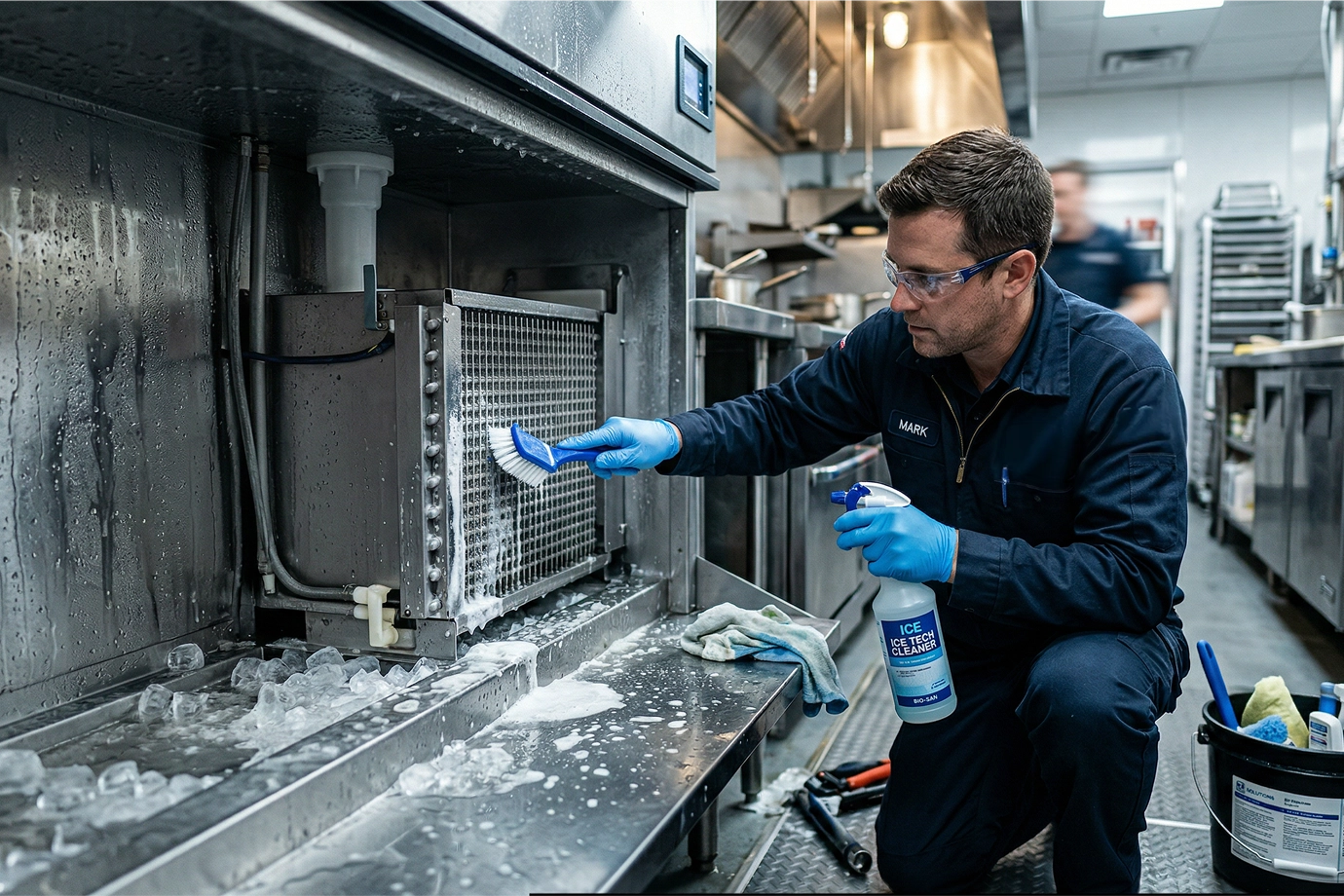
Here’s how frequently you should schedule cleaning based on your type of business and environment:

Cafés & Small Restaurants

Every 6 months
Lower overall output means slower buildup, but even here, you don’t want any surprises during a busy lunch service.

Pubs, Clubs & Bars

Every 6 months
Yeast and sugars from spills around bars make these machines prime candidates for faster grime and biofilm formation.

Hotels, Aged Care & Healthcare

Every 3 months

Hygiene is critical, especially where vulnerable guests or patients are involved.

Industrial / High-Volume

Every 3 months
Hygiene is critical, especially where vulnerable guests or patients are involved.

Hard Water Areas (Tamworth Angle)

Every 2–3 months
Mineral scale from hard water can seriously reduce efficiency if not managed regularly.

Complete Commercial Ice Machine Cleaning Schedule

This simple checklist helps you stay ahead of problems before they become costly.

Daily
  • Wipe external surfaces
  • Check scoop storage for cleanliness
  • Listen for unusual sounds or smells
Weekly
  • Clean ice bin interior
  • Check and clear drain lines
  • Inspect door and lid seals
Every 3 Months
  • Clean or replace water filters
  • Inspect condenser coils
  • Flush water lines
Every 6 Months
  • Full deep clean with sanitiser
  • Descale internal production components
  • Get a professional service

Warning Signs Your Ice Machine Needs Cleaning NOW

Your machine isn’t subtle when it needs attention. Watch for these tell‑tale signs:
  • Low ice production– the machine struggles to keep up
  • Cloudy or bad‑tasting ice– minerals and contaminants in the ice
  • Slime or mould inside the bin– hygiene risk escalating
  • Loud or laboured operation– clogged components working overtime
  • Longer production cycles– scale accumulating on evaporator plates
Here in Tamworth, if you’ve just come through a dust storm or noticed the machine running constantly but still not keeping up, it’s a strong signal that cleaning can’t wait. You may even need emergency refrigeration repair to prevent further damage.

What Happens If You Don’t Clean Your Ice Machine?

Skipping regular cleaning isn’t a small risk; it has real consequences. Ignoring maintenance can lead to costly internal damage, and sometimes a full ice machine repair may be necessary if issues aren’t addressed early. The longer you wait, the harder and more expensive repairs become.

Some of the main problems you might face include:

  • Failed health inspections– ice deemed unsafe is treated like contaminated food
  • Reputation damage– word spreads fast when hygiene slips
  • Void warranties– manufacturers often require proof of maintenance
  • 60% of breakdowns stem from scaling or water issues– meaning avoidable internal damage
  • Costly downtime during peak summer– when you need ice the most

When Should You Call a Professional Technician?

Even with consistent cleaning, there are times when DIY won’t cut it. Consider calling a trained technician when:
  • You haven’t had service in over 6 months
  • Ice production drops sharply despite cleaning
  • You suspect compressor, refrigerant, or electrical issues
  • Coils need a thorough professional clean
  • You need documentation for NSW food safety compliance
  • Filters or parts require replacement beyond basic cleaning tasks

Professional commercial refrigeration technicians bring not just tools, but expertise that prevents small issues from becoming big ones.

Conclusion

In Tamworth’s heat and dust, keeping your ice machine clean is essential. Hard water, heavy use, and fine dust accelerate scale and bacteria buildup, affecting taste, hygiene, and machine life. Regular commercial ice machine maintenance protects health, improves efficiency, and keeps your business running smoothly.

Whether you operate a café, hotel, bar, or high-volume facility, following a practical cleaning schedule and calling in expert support when needed ensures your ice stays safe and your equipment performs at its best.

 Beat Tamworth’s heat and dust! Contact Airfreeze for expert ice machine cleaning Tamworth services, regular maintenance, and emergency repairs to keep your ice safe and equipment reliable.

Table of Contents

Share via

Scroll to Top