Get a Free Quote

VRV System Faults: What Commercial Tenants Should Know

VRV System Faults_ What Commercial Tenants Should Know

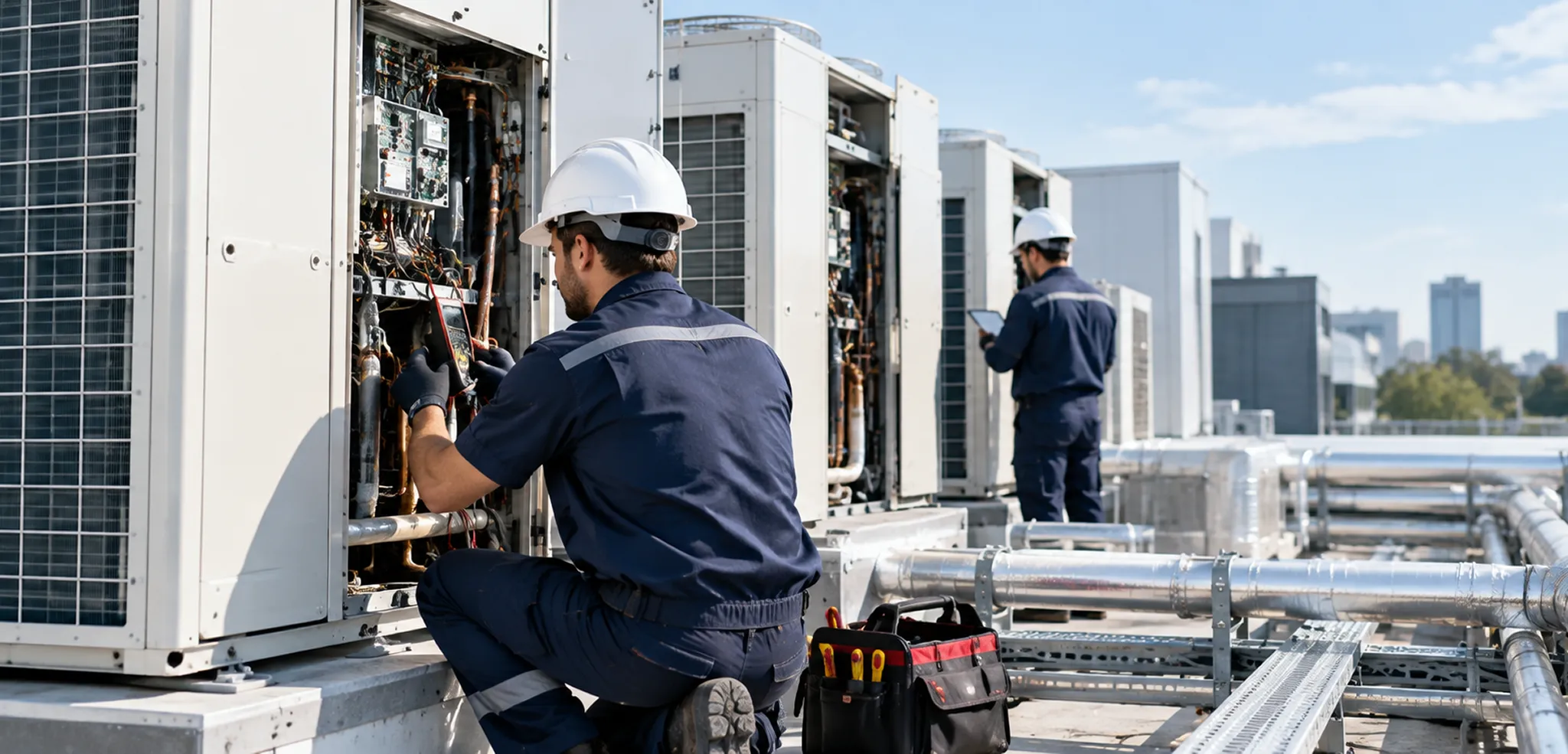
A VRV system can keep a commercial building comfortable without needing separate air conditioners for every room. But when something goes wrong, the signs are not always obvious. One office may feel too warm while another stays cold. Airflow may become weak, strange sounds may appear, or the system may stop without warning. For commercial tenants, these problems can quickly affect staff, customers, stock, and daily work. Knowing the common signs of VRV system faults can help you spot a problem early and report it before it becomes a bigger repair. This blog explains what to look for, what may cause it, and when professional help is needed.

What Is a VRV System?

VRV stands for Variable Refrigerant Volume. It is a type of commercial air conditioning system that can serve multiple indoor areas from a connected outdoor system.

Instead of treating the whole building as one space, a VRV system can control different rooms or zones based on their individual needs. This makes it useful in offices, retail spaces, restaurants, hotels, schools and other commercial buildings.
Modern VRV systems can also include central controls that allow building operators to monitor and manage multiple indoor units. Some systems can record operating history and alert users when a fault occurs.
For tenants, this means a problem may not always affect the entire building. A fault in one part of the system can first appear as a problem in a single room or zone.

Common Signs of VRV System Faults

1. Some rooms are too hot or too cold

Uneven temperatures are one of the easiest problems to notice. If one office feels comfortable while another is unusually warm, there could be an issue with the indoor unit, airflow, controls or the wider system.
Do not assume that changing the thermostat will fix it. If the same room continues to have problems, it is worth reporting.

2. Weak or reduced airflow

You may notice that the air coming from an indoor unit feels much weaker than usual. This can happen when filters are dirty, airflow is restricted, or a fan or other component is not working correctly.
In a busy commercial space, reduced airflow can become uncomfortable quickly. It may also indicate that the system needs professional attention.

3. The system is not cooling or heating properly

A VRV system may still run even when it is not working as it should. For example, the indoor fan may operate, but the room does not reach the expected temperature. This can point to problems with refrigerant, sensors, outdoor equipment, controls or other components.
A system that keeps running without giving the expected result should not simply be left running for longer.

4. Unusual sounds

Commercial air conditioning systems make some operating noise. However, new or unusual sounds should get attention. Rattling, buzzing, grinding or repeated clicking can indicate a problem with a fan, motor, electrical component or another part of the system.
The sound itself may not tell you exactly what has failed. It is better to describe when the sound happens and which indoor unit is affected when reporting the problem.

5. Water leaking from an indoor unit

Water around an indoor air conditioning unit is not something tenants should ignore. A blocked drain, drainage problem, frozen coil or other fault may cause water to collect or leak.
Apart from affecting the air conditioner, water can damage ceilings, walls, flooring, furniture and electrical equipment. If you notice a leak, report it quickly and keep people away from any electrical hazard.

6. Error codes or warning messages

Some VRV systems can display fault codes through their controller. These codes can help a qualified technician identify where further investigation is needed. Modern commercial VRV controllers can also support fault alerts and operating history, which can make troubleshooting more targeted.
If an error code appears, take a photo and record the affected room or unit. Do not try to reset the system repeatedly just to make the warning disappear.

What Causes VRV System Faults?

There is rarely one single reason behind every VRV problem. Common causes can include:
  • Dirty filters and restricted airflow
  • Blocked or damaged drainage
  • Electrical faults
  • Sensor problems
  • Fan or motor issues
  • Refrigerant related problems
  • Outdoor unit faults
  • Controller or communication issues
  • Poor system settings
  • Lack of regular maintenance
  • Age or wear of components
The important point is that the visible symptom may not be the actual cause.
For example, a warm office does not automatically mean the air conditioner needs more refrigerant. A technician needs to check the system and identify the real problem before deciding what repair is required.

Why Small VRV Problems Can Become Business Problems

For a commercial tenant, air conditioning is more than a comfort issue. A warm office can make staff uncomfortable. A hot retail area can affect the customer experience. Temperature problems in restaurants, food businesses, medical facilities or other specialised environments may create additional operational concerns.
There is also the question of downtime. When a fault is ignored, a small issue may develop into a larger repair. The longer the system operates with a problem, the harder it can be for building occupants to work normally. That is why early reporting matters.

What Should Commercial Tenants Do When a Fault Appears?

Start by noting what you can see and feel.
Record:
  • Which room or zone is affected
  • Whether the problem affects heating, cooling or airflow
  • When the issue started
  • Whether other rooms are affected
  • Any unusual sounds or smells
  • Any water leaks
  • Any error code shown on the controller
  • Whether the problem comes and goes
This information can help the building manager or technician understand the problem faster.

Should You Repair or Replace the VRV System?

Not every fault means the whole system needs replacing. A professional inspection can help determine whether the issue is a single component, a maintenance problem, a control issue or a larger system concern.

The age of the equipment also matters. So does the frequency of breakdowns, repair cost, system performance and the availability of replacement parts. A system that has one isolated fault may only need a repair. A system with repeated problems may need a broader review.

For commercial tenants, the first step is usually to report the fault to the property manager or building owner and arrange an assessment.

How Regular VRV Maintenance Can Help

Waiting for a breakdown is not the only way to manage a commercial air conditioning system.

Regular maintenance can help identify developing problems before they cause major disruption. AirFreeze recommends preventative maintenance for Daikin systems to help reduce unexpected breakdowns, improve system performance and extend equipment life.

A maintenance visit may include checking system operation, filters, airflow, drainage, electrical components and other key parts.
For larger commercial buildings, central monitoring can also make it easier to see system performance and identify faults. Some Daikin VRV control systems offer operation history and fault alerts.

When Should You Call a Professional?

Some problems need attention straight away. Contact a qualified technician if the system:
  • Stops working completely
  • Repeatedly shows an error code
  • Has water leaking from an indoor unit
  • Makes unusual electrical or mechanical sounds
  • Produces a burning smell
  • Cannot maintain the required temperature
  • Experiences repeated breakdowns
  • Shows signs of an electrical fault
For commercial properties, fast action can help limit downtime and prevent a small fault from affecting more areas of the building. AirFreeze offers commercial air conditioning repair, maintenance and installation services, along with 24/7 emergency support for commercial work.

Conclusion

VRV faults can affect comfort, productivity and business operations. Watch for uneven temperatures, weak airflow, unusual sounds, leaks or error codes. Reporting these signs early and scheduling regular maintenance can help prevent bigger problems, reduce downtime and keep your commercial air conditioning system working reliably.

Need help with a commercial VRV fault? Contact AirFreeze for professional air conditioning repair and maintenance across Tamworth, New England and surrounding areas. Get your system checked before a small problem becomes a major disruption

Picture of Veer Pratap
Veer Pratap

CEO / Director (Refrigeration A/C Supervisor, Electrician)

Table of Contents

Share via

Scroll to Top