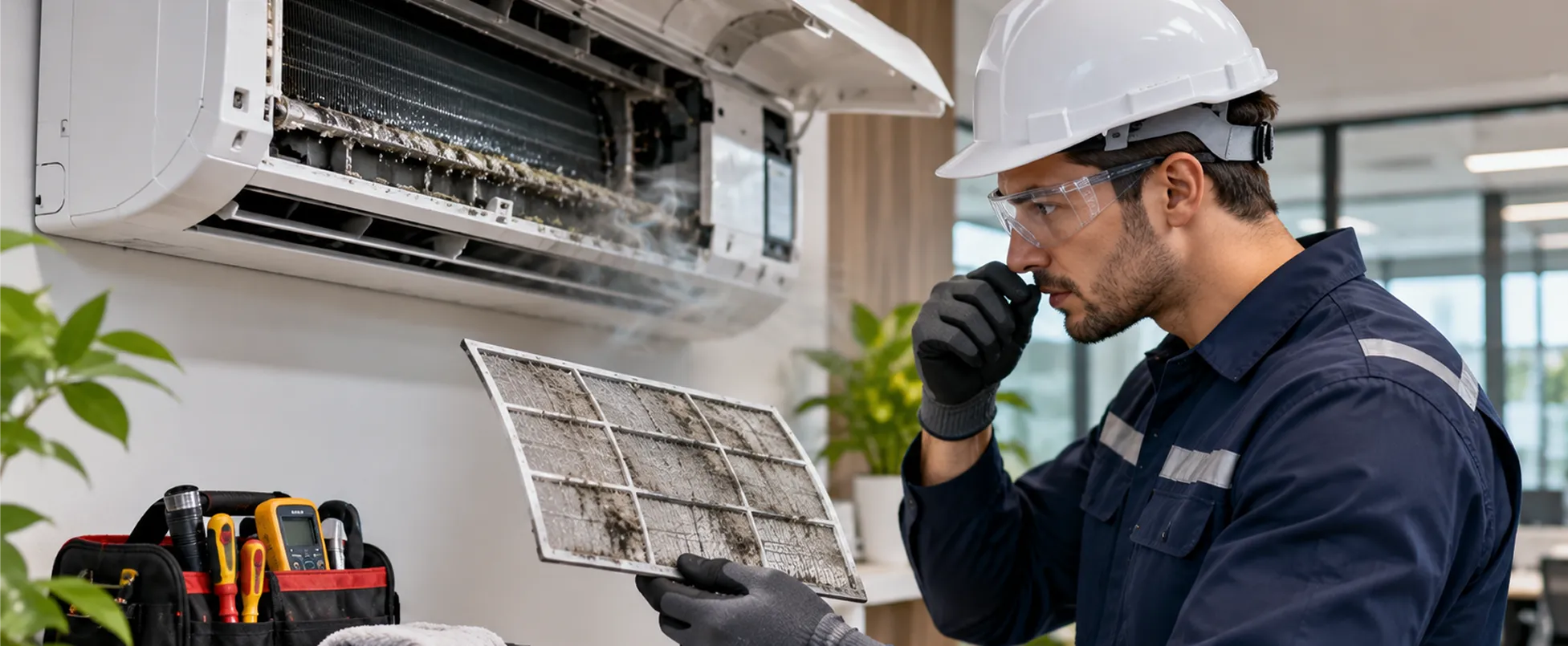
There is nothing more frustrating than switching on your air conditioner on a hot summer afternoon, only to notice an unpleasant smell spreading throughout the room. Instead of enjoying cool, refreshing air, you are left wondering whether something is wrong with your system.
Unpleasant odours can develop for several reasons, ranging from accumulated dust and excess moisture to bacterial growth and electrical faults. While some issues can be resolved through basic cleaning, others require professional attention to prevent further damage.
Air conditioners continuously circulate indoor air while regulating temperature and removing moisture. Over time, dust, airborne particles and moisture can accumulate within different components, creating conditions that encourage unpleasant odours.
Identifying the type of smell is often the first step towards understanding the underlying problem.
If your aircon smells musty, excess moisture or microbial growth could be responsible. This is particularly common in humid environments or when an air conditioner remains unused for several months.
Moisture can collect around evaporator coils, drain pans and internal components, creating favourable conditions for mould and bacteria.
When your aircon smells like fish, it could indicate overheating electrical components, damaged wiring or deteriorating electrical insulation. As certain electrical materials become excessively hot, they can release a distinctive fish-like odour.
Switch off the air conditioner immediately and isolate its power supply if safe to do so. Avoid restarting the system until a qualified professional has inspected the electrical components and resolved the fault.
A strong rotten smell may indicate that insects, rodents or other small animals have entered the air conditioning system or ductwork. Organic matter trapped inside the equipment can produce unpleasant odours as it decomposes.
The smell may become particularly noticeable when air circulates through the system.
Arrange a professional inspection of the affected components or ductwork. Removing the source, cleaning contaminated areas and addressing potential pest entry points can help prevent the problem from returning.
A burning smell may result from overheating motors, damaged wiring, faulty electrical connections or other mechanical problems. Ignoring these warning signs could lead to equipment failure or create serious safety risks.
An unusual chemical odour may originate from cleaning product residues, overheated materials or a refrigerant-related problem. Reduced cooling performance, unusual noises or ice formation may indicate that further investigation is required.
Switch off the unit, ventilate the room safely and arrange a professional inspection. Refrigerant leaks cannot be reliably identified by smell alone, and refrigerant-related repairs require appropriately licensed technicians.
The presence of mould in air conditioner components is a common concern, particularly in areas experiencing high humidity. Air conditioners naturally produce condensation during cooling, and when moisture does not drain or evaporate properly, it can contribute to mould growth.
Common contributing factors include dirty evaporator coils, clogged drainage systems, poor ventilation, irregular maintenance and prolonged periods of inactivity.
Mould contamination can contribute to unpleasant smells and reduced indoor air quality. Exposure may also cause irritation or aggravate respiratory symptoms in sensitive individuals.
Professional inspection can help determine the extent of contamination and identify the conditions encouraging its growth.
Dirty filters can restrict airflow and accumulate dust, moisture and airborne contaminants. Regularly cleaning washable filters according to the manufacturer’s recommendations helps maintain efficient airflow and reduces odours associated with accumulated debris. Allow filters to dry completely before reinstalling them.
Routine filter cleaning may not address contamination located deep within the equipment. Professional AC mold removal can involve inspecting and cleaning affected evaporator coils, blower fans and drainage components using suitable methods. Avoid spraying household bleach or unapproved chemicals inside the unit.
Poor ventilation can contribute to excessive indoor humidity and lingering household odours. Opening windows when outdoor conditions permit, using exhaust fans and managing moisture in kitchens and bathrooms can help maintain a more comfortable indoor environment.
Preventative maintenance is one of the most effective ways to reduce recurring odours and maintain reliable cooling performance.
Regular maintenance also helps identify developing mechanical problems before they result in expensive repairs or unexpected breakdowns.
While basic filter cleaning can resolve some minor issues, persistent smells often indicate problems requiring professional attention.
Contact a technician if unpleasant odours return shortly after cleaning, cooling performance decreases, visible mould develops, water leaks from the indoor unit or unusual noises become noticeable.
An unpleasant smell coming from your air conditioner should never become a normal part of your indoor environment. Whether caused by accumulated dust, trapped moisture, mould growth or electrical faults, identifying and addressing the problem early can help protect your equipment and improve indoor comfort.
Regular cleaning, timely repairs and preventative maintenance can keep your system operating reliably while reducing the likelihood of recurring odours and costly breakdowns.