Keeping a commercial air conditioning (AC) system in good working condition isn’t about comfort; it’s about saving money, avoiding breakdowns during peak hours, and supporting a healthy environment.
A maintenance checklist helps managers and technicians stay on top of all the important tasks that keep systems running reliably.
Below is a friendly, step-by-step guide you can follow, whether you’re responsible for a small shop, a large office, a warehouse, or any other commercial space that depends on a robust AC system.
Why regular maintenance matters
Commercial AC systems work harder than residential units because they run longer and serve more people every day. Without regular care, parts can wear down faster, airflow can fall off, and energy use can spike.
Regular maintenance helps avoid unexpected problems, keeps your cooling system working longer, saves money, and improves how well it runs.
Daily and weekly tasks
These are simple checks that you and your on-site team can carry out often. Doing them regularly helps identify small issues before they become big ones.
Visual inspections
Take a walk-around look at your AC units, both inside and outside. Look for signs like:
- Odd noises or rattling
- Water pooling near units
- Visible leaks
- Unusual smells
Pay attention; if something looks or sounds off, it could be an early sign of trouble.
Outdoor area clear-out
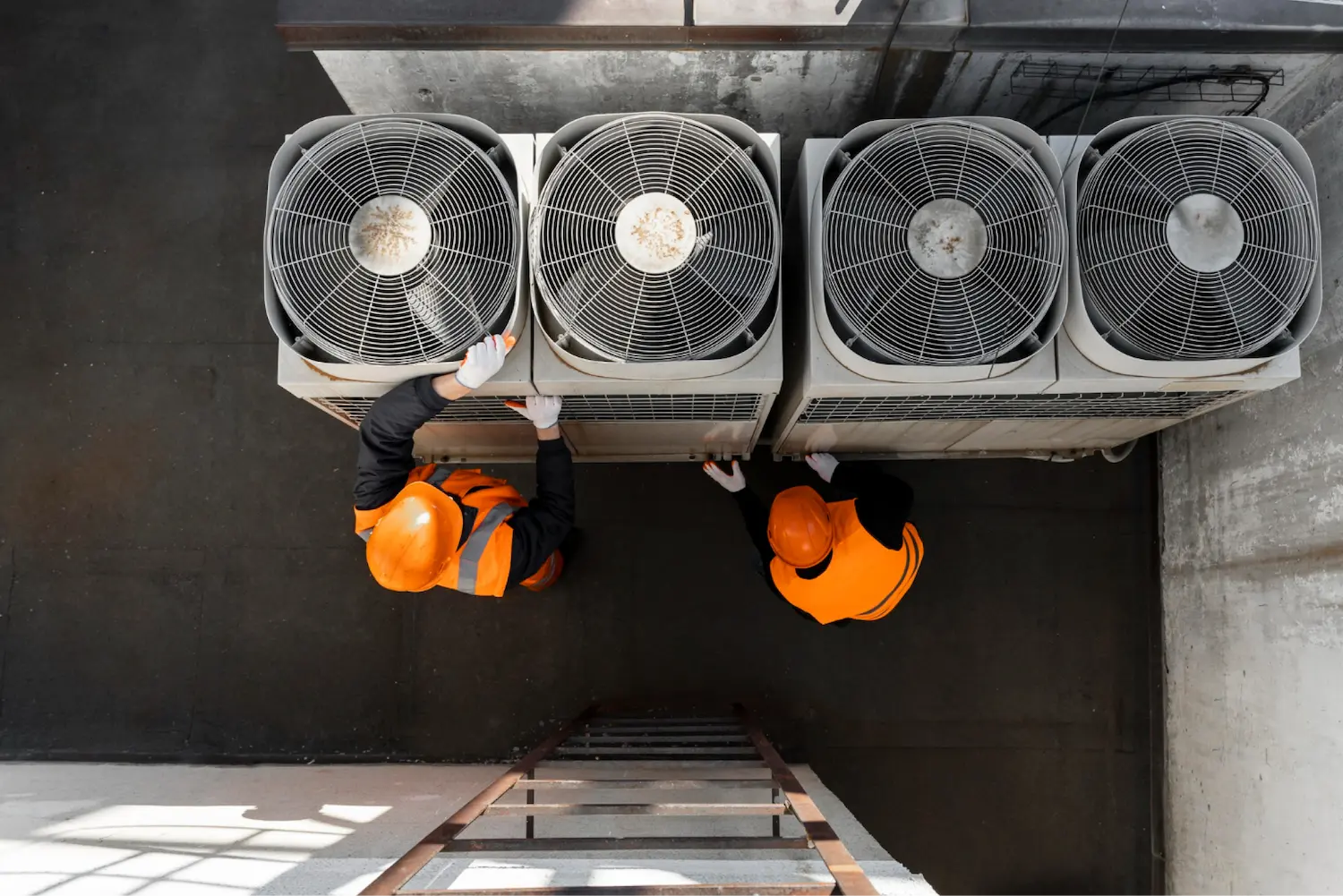
Outdoor condenser units can get clogged with leaves, trash, and brush. Clear at least a few feet of space around these units to allow air to move freely.
Monthly maintenance checklist
Once a month, put a little extra focus on key parts of your system.
1. Check and replace air filters
Air filters trap dust and dirt. Over time, they get clogged, which slows airflow and makes your AC work harder than it should. Inspect them monthly and replace when dirty. High-traffic or dusty environments may need filter changes more often.
2. Test thermostat settings
Look at your thermostat or building controller. Make sure temperatures match what’s actually happening in the space. If readings are off or inconsistent across zones, it’s time to recalibrate or adjust settings.
3. Spot-clean coils
The evaporator (inside) and condenser (outside) coils collect dust and debris. Wiping down or light cleaning keeps heat transfer working well and helps maintain consistent cooling.
Quarterly maintenance tasks
Around every three months, especially at the start of hot or cool seasons, check these items more thoroughly.
1. Deep clean outdoor units
Outdoor components like condenser coils should be washed or blown clear of dirt. This helps airflow and performance.
2. Inspect ductwork
Leaky or blocked ducts reduce airflow and make your AC less efficient. Look for obvious dust build-up, gaps, or disconnected sections and schedule duct cleaning if needed.
3. Check refrigerant levels
Refrigerant is what cools your air. If levels drop, your system can’t cool well, and energy use goes up. Have a certified technician check for leaks and top up if needed.
Bi-annual and annual tasks
Twice a year, ideally before summer and winter, reserve time for a deeper look.
1. Full Electrical Check
Loose wires or corroded connections can cause intermittent faults or system failure. Have a technician inspect wiring, terminals, and safety switches.
2. Lubricate Moving Parts
Fans, motors, and bearings all have parts that move constantly. Adding lubrication reduces friction, prolongs their life, and lowers the chance of noise or breakdowns.
3. Drain Lines and Pans
Blocked drain lines cause water backups, which can lead to leaks or mould growth. Look for standing water and flush out traps and lines.
4. Measure System Performance
Check things like airflow, temperature differences from intake to output, and how smoothly the system cycles on and off. This shows you if your system is running as expected or if tweaks are needed.
Tips for better results
- Keep a Maintenance Log: Write down when each task was done, and note anything unusual. This history helps spot trends, track repairs, and make future planning easier.
- Work With Certified Technicians: Some tasks, especially refrigerant handling and electrical checks, should only be done by trained professionals. This protects your equipment and meets safety standards.
- Match Maintenance to Usage: Buildings with higher foot traffic or dusty environments may need more frequent checks, especially filters and ducts.
Conclusion
A commercial air conditioning maintenance checklist isn’t just a to-do list. It’s a practical tool that helps you care for one of your big operating assets. When tasks are done regularly, you’ll notice: better cooling comfort, lower energy use, fewer surprises in busy months, and longer equipment life.
Start with daily basics, move up to monthly tune-ups, and don’t skip seasonal deep dives. Over time, this simple routine will pay off in smoother performance and fewer emergency fixes.
Keep your business cool and comfortable year-round. Call Airfreeze today for reliable commercial and residential air conditioning, refrigeration, and electrical services. Fast, professional service you can trust every time.