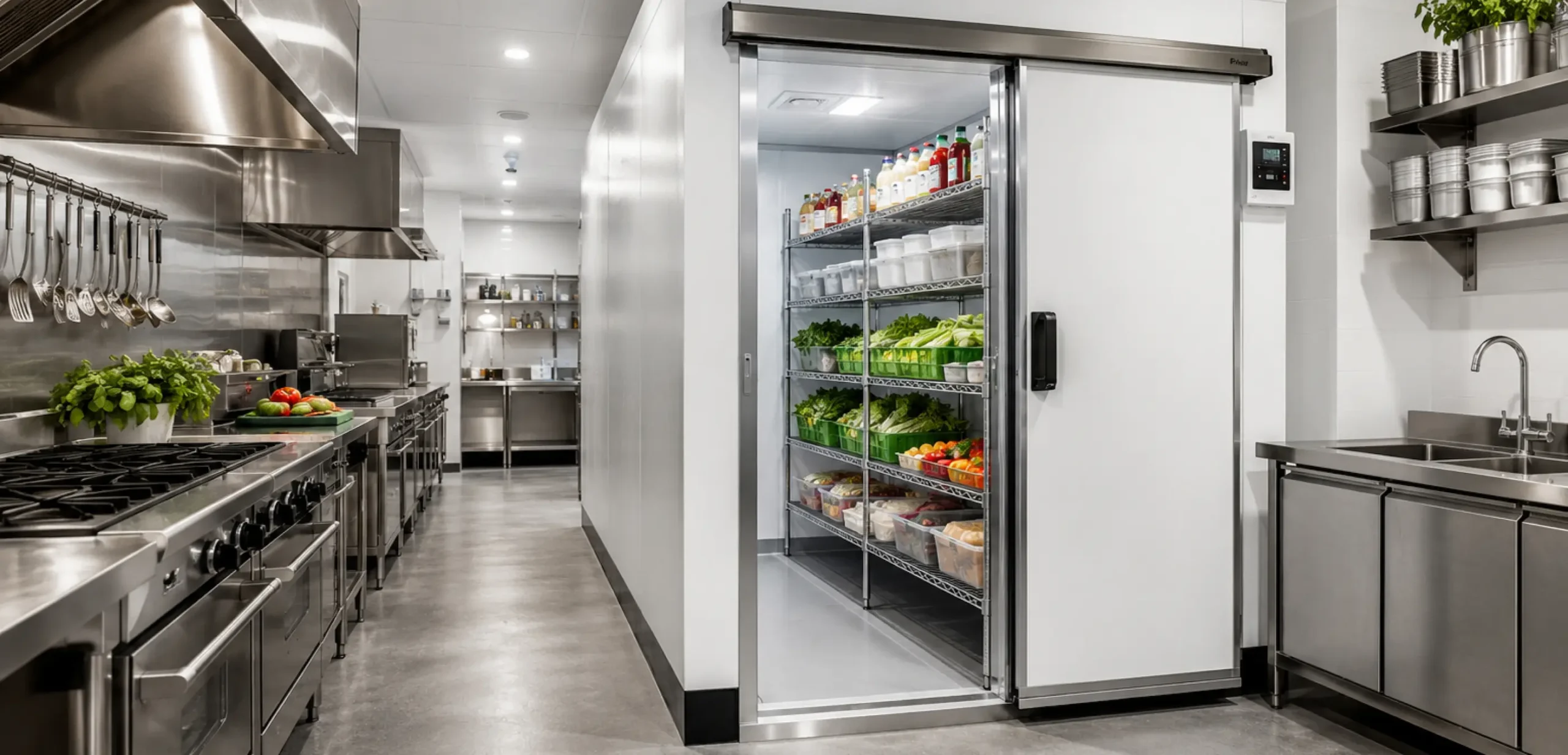
Choosing the right cool room size is one of the most important decisions for any food business. Whether you own a café, restaurant, or butchery, your cool room plays a key role in preserving food quality, maintaining food safety standards, and supporting smooth day-to-day operations.
A unit that’s too small can become overcrowded, affecting airflow and storage efficiency, while one that’s too large may increase installation and energy costs. The ideal cool room should suit your current storage needs while leaving room for future growth. Making the right choice from the start can save both time and money in the long run.
This guide explores the factors that influence cool room sizing, how storage needs differ across businesses, common sizing mistakes to avoid, and why professional planning matters.
A cool room is more than just refrigerated storage, it’s an essential part of your business operations. The right size helps maintain consistent temperatures, improves organisation, and allows staff to work more efficiently.
A properly sized cool room provides enough storage without compromising airflow or accessibility. It also makes inventory management easier and allows your business to operate more efficiently during busy periods.
No two food businesses have the same refrigeration requirements. Before deciding on a cool room, consider the following factors.
The products you store have a major impact on sizing. Fresh produce, dairy, beverages, seafood, and meat all require different storage arrangements. Some items can be stacked, while others need dedicated shelving or hanging systems. Planning storage based on your product mix helps maximise available space.
Think beyond your average daily stock. Consider how much inventory you keep during weekends, holidays, or busy trading periods. Businesses that purchase ingredients in bulk generally require more refrigerated storage than those receiving frequent deliveries.
Delivery frequency also affects storage needs. A café receiving fresh supplies every day typically requires less space than a restaurant or butchery receiving large deliveries once or twice a week.
The cool room should fit comfortably within your premises while allowing room for staff movement, shelving, cleaning, and door clearance. A poorly positioned cool room can slow down daily operations, even if the storage capacity is sufficient.
If you plan to expand your menu, increase customer volume, or introduce catering services, your refrigeration requirements will likely grow. Choosing a cool room with some additional capacity can help avoid expensive upgrades later.
Every business stores products differently, so cool room requirements vary depending on the industry.
Cafés generally store milk, cakes, fresh produce, beverages, sandwich ingredients, and desserts. Since many receive daily deliveries, they often don’t require large storage areas.
However, accessibility is essential. During busy coffee service, staff need quick access to ingredients. A compact cool room with organised shelving usually provides the right balance between storage and efficiency.
Restaurants typically require more refrigeration because they store a wider variety of ingredients, including meat, seafood, vegetables, dairy products, sauces, desserts, and prepared meals.
Larger kitchens also benefit from designated storage zones that separate raw ingredients from ready-to-serve foods. An organised layout improves workflow and supports food safety practices while making stock management easier.
Butcheries have specialised refrigeration needs due to the volume and type of products they handle. Whole carcasses, meat cuts, processed products, and bulk deliveries require larger storage areas with heavy-duty shelving or hanging rails.
Maintaining consistent temperatures is particularly important, making professional planning essential when designing a butchery cool room.
Choosing the right size isn’t simply about measuring floor space. You also need to consider how products will be stored inside the cool room.
Avoid stacking cartons tightly against walls or filling shelves completely. Leaving space between products improves cooling performance, makes stock rotation easier, and reduces the risk of spoilage. A well-organised cool room is often more efficient than a larger room with poor storage planning.
Choosing the wrong cool room size often leads to higher costs and operational challenges. Some of the most common mistakes include:
Avoiding these mistakes can improve efficiency and reduce long-term costs.
Many business owners wonder whether it’s worth installing a slightly larger cool room.
If your business is expected to grow, adding some extra storage capacity can be a smart investment. It provides flexibility for increased inventory, menu expansion, or higher customer demand without requiring major upgrades.
However, the goal isn’t simply to install the largest cool room possible. The best solution balances current storage needs with future growth while remaining energy efficient.
Every café, restaurant, and butchery operates differently. That’s why professional planning is so valuable. An experienced refrigeration specialist considers your inventory, available space, workflow, delivery schedules, and future plans before recommending a suitable solution.
They can also advise on shelving layouts, insulation, refrigeration systems, and energy-efficient designs. Professional guidance helps ensure your cool room supports your business both now and in the years ahead.
Planning ahead also helps reduce unnecessary costs and avoids the need for early upgrades. With expert advice, your cool room can become a reliable asset that keeps your business running efficiently for years to come.