Room Size
When temperatures rise, finding an efficient and cost-effective cooling solution becomes a priority for homeowners and businesses alike. While traditional air conditioning systems remain popular, many people are turning to evaporative coolers as an energy-efficient alternative. These cooling systems offer effective temperature control while consuming significantly less electricity than conventional air conditioners.
At Airfreeze, we understand that choosing the right cooling solution can make a significant difference in comfort, energy bills, and environmental impact. In this guide, we’ll explain what an evaporative cooler is, how it works, its benefits, and whether it’s the right choice for your property.
What Is an Evaporative Cooler?
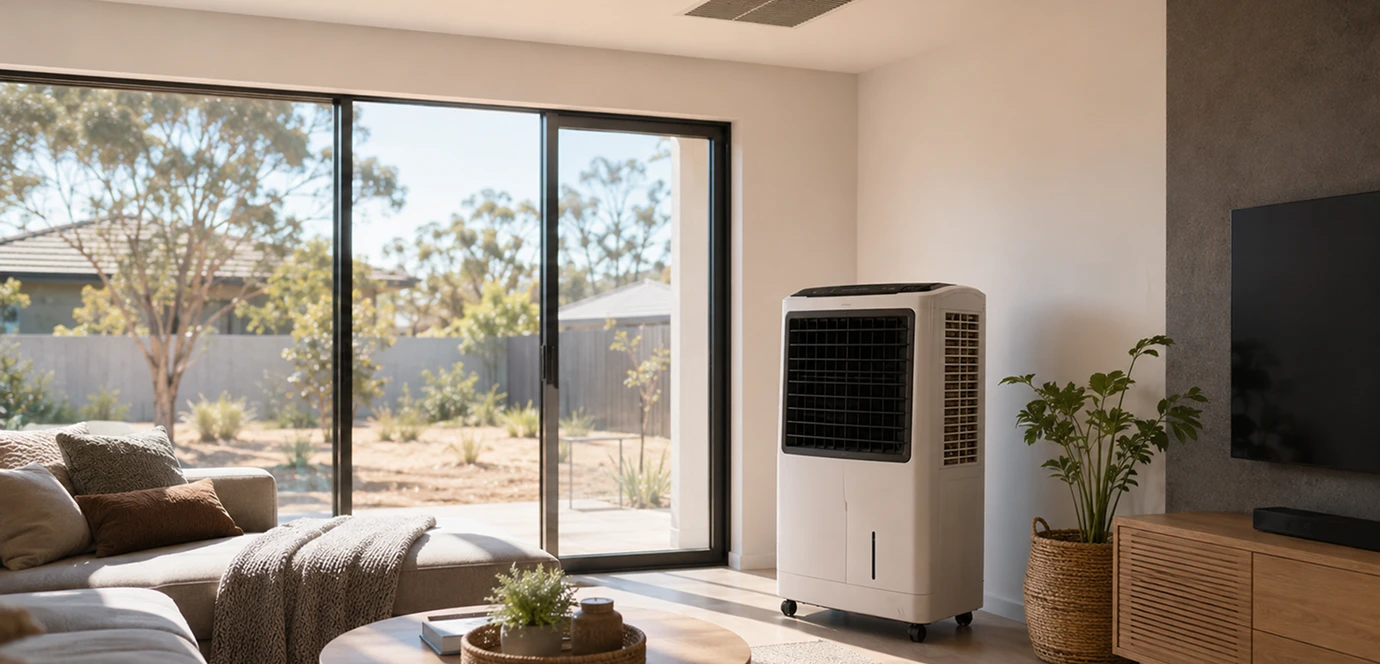
An evaporative cooler, often referred to as a “swamp cooler,” is a cooling system that lowers air temperature through the natural process of water evaporation. Unlike traditional air conditioners that rely on refrigerants and compressors, evaporative coolers use water and airflow to create a cooling effect.
Definition of an Evaporative Cooler
The system works by drawing warm outdoor air through water-saturated cooling pads. As the air passes through these pads, the water evaporates and absorbs heat from the air. This process cools the air before it is circulated throughout the indoor space.
How It Differs from Traditional Air Conditioning
Traditional air conditioners use refrigerants to remove heat from indoor air and recirculate cooled air throughout a building. In contrast, evaporative coolers rely on natural evaporation and continuously bring fresh outdoor air indoors. Because they do not require compressors or refrigerants, they generally consume less energy and have lower operating costs.
How Does an Evaporative Cooler Work?
Understanding how an evaporative cooling system works can help you determine whether it suits your cooling needs.
Step 1: Warm Air Is Drawn Into the Unit
The cooling process begins when a fan pulls warm outdoor air into the evaporative cooler. The air passes through specially designed cooling pads that are continuously supplied with water.
Step 2: Water Evaporation Cools the Air
As the warm air moves through the damp cooling pads, water naturally evaporates. During evaporation, heat energy is absorbed from the air, causing the air temperature to drop significantly. This natural cooling process can provide noticeable relief during hot weather.
Step 3: Cool Air Is Circulated Indoors
Once cooled, the air is distributed throughout the room or building by the unit’s fan. Unlike traditional air conditioning systems that recycle indoor air, evaporative coolers continuously introduce fresh air, helping maintain a comfortable and healthier indoor environment.
This simple yet effective process makes evaporative coolers one of the most energy-efficient cooling solutions available today.
Benefits of Using an Evaporative Cooler
There are several reasons why homeowners and businesses choose evaporative coolers over conventional air conditioning systems.
Lower Energy Consumption
One of the biggest advantages of evaporative coolers is their low energy usage. Since they operate without compressors and refrigerants, they consume significantly less electricity than traditional air conditioners. This can result in noticeable savings on energy bills, especially during peak summer months.
Environmentally Friendly Cooling
Evaporative coolers provide an eco-friendly cooling option. They use water rather than chemical refrigerants, reducing their environmental impact. Lower electricity consumption also contributes to a smaller carbon footprint.
Improved Indoor Air Quality
Unlike traditional air conditioners that recirculate indoor air, evaporative coolers continuously bring fresh outdoor air into the building. This constant airflow can help reduce stale air, odors, and indoor pollutants while creating a more comfortable living or working environment.
Lower Installation and Operating Costs
Evaporative coolers are often more affordable to purchase, install, and maintain than traditional air conditioning systems. Their simpler design means fewer mechanical components, which can reduce maintenance requirements and repair costs over time.
Where Do Evaporative Coolers Work Best?
While evaporative coolers offer many benefits, their effectiveness depends largely on climate conditions.
Ideal Climate Conditions
Evaporative coolers perform best in hot, dry environments where humidity levels are low. In these conditions, water evaporates more easily, allowing the cooling system to achieve maximum efficiency and cooling performance.
Suitable Applications
Evaporative coolers are commonly used in:
- Residential homes
- Warehouses
- Workshops
- Garages
- Factories
- Outdoor entertainment areas
Their ability to provide fresh airflow makes them particularly useful in large or semi-open spaces.
Situations Where They May Be Less Effective
In regions with high humidity, evaporative coolers may not perform as effectively because the air already contains significant moisture. Coastal and tropical areas often experience reduced cooling efficiency compared to dry inland locations.
Evaporative Cooler vs Air Conditioner: Which Is Better?
Choosing between an evaporative cooler and an air conditioner depends on your specific requirements.
Energy Efficiency Comparison
Evaporative coolers consume far less electricity, making them an attractive option for energy-conscious property owners.
Cooling Performance Comparison
Traditional air conditioners generally provide stronger and more consistent cooling, particularly in humid climates. However, evaporative coolers offer excellent performance in dry conditions while maintaining lower operating costs.
Cost Comparison
Evaporative coolers typically have lower installation, maintenance, and energy expenses. Air conditioners may require a larger upfront investment and higher long-term operating costs.
Ultimately, the best option depends on your climate, budget, and cooling expectations.
Maintenance Tips for Evaporative Coolers
Proper maintenance helps ensure optimal performance and extends the lifespan of your evaporative cooling system.
Clean Cooling Pads Regularly
Dust, dirt, and mineral deposits can accumulate on cooling pads over time. Regular cleaning or replacement helps maintain efficient airflow and cooling performance.
Check Water Levels and Pump Function
Ensure the water reservoir remains adequately filled and inspect the pump periodically to confirm it is operating correctly.
Schedule Professional Maintenance
Annual inspections by experienced technicians can identify potential issues early and help keep your evaporative cooler operating at peak efficiency.
Choose the Right Cooling Solution with Airfreeze
Selecting the right cooling system can significantly improve comfort while reducing energy costs. Whether you’re considering an evaporative cooler for your home, warehouse, or commercial property, understanding its advantages and limitations is essential.
At Airfreeze, our cooling specialists provide expert advice, installation support, and maintenance services tailored to your unique requirements. We can help you determine whether an evaporative cooling system is the ideal solution for your space and ensure it operates efficiently year-round.
Contact Airfreeze today to learn more about our professional cooling solutions and discover the most effective way to stay comfortable while saving energy.