Commercial refrigeration is more than placing a cooling unit in a commercial space and connecting it to power. The system must match the business, available space, storage needs, operating conditions, and products being stored. A well-planned installation helps businesses maintain suitable temperatures, protect stock, and reduce avoidable service interruptions.
For contractors, every refrigeration project has different requirements. A small café may need under-bench refrigeration, while a supermarket may require display cases or a rack system serving several areas. Restaurants, pubs, supermarkets, cold storage facilities, and retail outlets all have different demands.
This guide covers common commercial refrigeration types, installation challenges, and practical maintenance tips for contractors.
Commercial refrigeration systems are designed for different storage needs, temperatures, spaces, and business operations. Understanding the available options helps contractors select equipment that suits each commercial application.
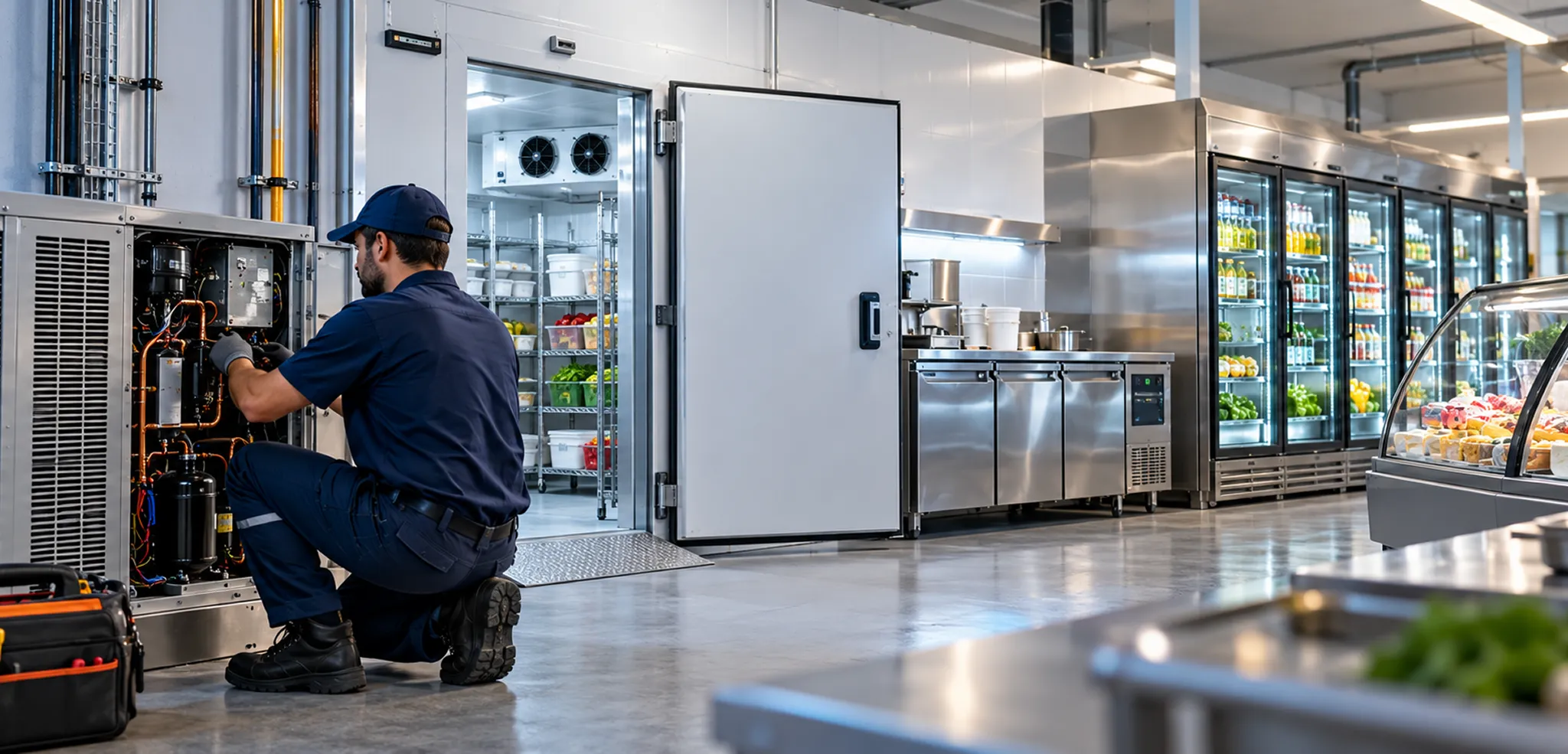
Walk-in cool rooms provide substantial refrigerated storage for restaurants, supermarkets, pubs, food retailers, and other commercial premises.
Freezer rooms store products at lower temperatures than standard cool rooms. Contractors need to consider insulation, door seals, evaporator placement, defrost requirements, and product load.
Display cabinets and open cases are common in supermarkets, cafés, bakeries, delis, convenience stores, and retail outlets. Contractors should consider airflow, customer movement, loading access, cleaning, and condenser location before installation.
Under-bench fridges and refrigeration drawers are useful where kitchen space is limited.
Rack systems use multiple compressors to serve several refrigerated cases or areas.
A successful installation starts before equipment arrives. Contractors need to understand the application, inspect the site, and confirm that the selected system suits operating conditions.
Before installation, contractors should confirm the intended use of each refrigerated area and discuss any expected changes in capacity or operating hours. This helps the setup remain practical and easier to service later.
Contractors need to consider room size, product type, product temperature, door openings, ambient conditions, lighting, people, and other heat sources when assessing refrigeration load.
An undersized system may struggle to maintain temperature, while an oversized system can increase costs. Equipment should match the business’s actual requirements.
Commercial kitchens and retail spaces often have limited room for refrigeration equipment. Measure available space carefully and check ventilation and service clearances.
Refrigeration systems need suitable electrical connections and effective drainage. Condensation and defrost water require an appropriate drainage path, while electrical components must meet applicable requirements.
Poor pipework, inadequate insulation, leaks, or incorrect connections can affect refrigeration performance and create future service problems.
Contractors should follow manufacturer requirements and applicable Australian regulations when installing piping and working with refrigerants.
Installation is not complete when the equipment switches on. Temperature performance, controls, airflow, drainage, and electrical operation should be checked before handover.
Preventive maintenance can help identify worn components, airflow problems, dirty coils, drainage issues, and developing faults before they affect business operations.
Dust and debris on condenser coils can restrict heat transfer and make the refrigeration system work harder.
Damaged door seals allow warm air to enter refrigerated spaces. Inspect gaskets, hinges, door alignment, and closing mechanisms during routine maintenance, and replace damaged seals when required.
Operators should know the normal operating temperature for each refrigerated space. Temperature increases, longer running times, or repeated cycling can indicate an issue requiring professional inspection.
Blocked drains can cause water to collect around refrigeration equipment and create hygiene or operational problems. Check drain lines and defrost operation during routine service visits.
Storage items, walls, dust, or nearby equipment can obstruct airflow around key components. Check that vents and condenser areas remain clear, and that equipment has the required service space.
Maintenance frequency depends on equipment type, usage, operating environment, and business requirements.
AirFreeze offers customised preventative maintenance plans based on the customer’s refrigeration system and service requirements.
Businesses should not wait for a complete breakdown before arranging professional service. Warning signs include unusual noises, temperature fluctuations, excessive frost, water leaks, longer cooling cycles, rising energy consumption, or equipment that runs continuously.
Service frequency depends on the system and operating environment. High-use equipment may need more frequent inspections than equipment in a smaller setting.
Cleaning coils, checking seals, monitoring temperatures, inspecting drainage, and following a planned service schedule can help businesses avoid preventable problems. With the right installation approach and ongoing care, refrigeration systems can support reliable cooling, protect stock, and keep daily business operations running with fewer interruptions overall.