Understanding Ducted Reverse Cycle Systems
During winter, the system pulls warmth from outside air and moves it indoors. During summer, it works in reverse and removes heat from inside. If you want to know whether your unit is ready for the colder months, read our guide on getting your reverse cycle air conditioner ready for winter.
- Heat during winter
- Cool during summer
- Maintain indoor comfort all year
Understanding Gas Ducted Heating
- It heats spaces quickly
- The warmth feels strong and immediate
- It performs well during very cold weather
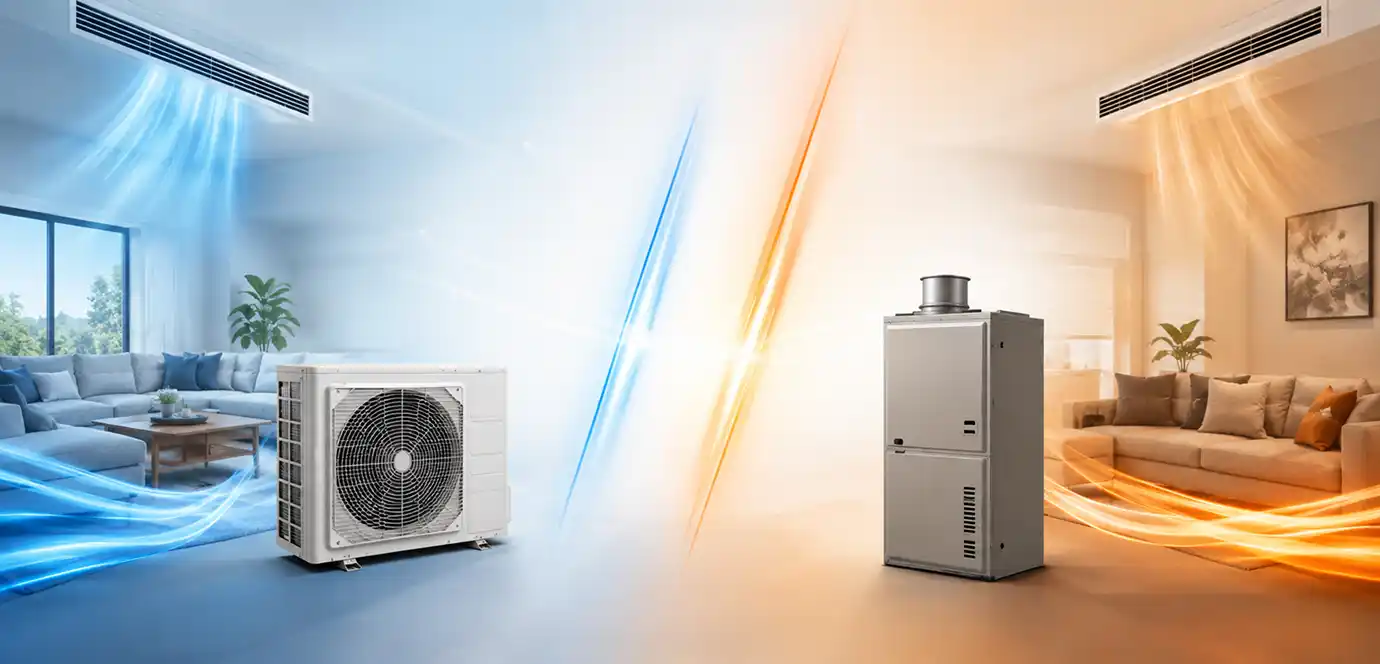
The Main Difference Between Both Systems
- Ducted reverse cycle: Heats and cools
- Gas ducted heating: Only heats
This affects installation decisions, long-term value, and ongoing energy costs. If cooling is already needed during summer, reverse cycle systems may reduce the need for installing a separate air conditioning setup later. For a broader overview of what different setups are available for commercial or larger spaces, see our page on types of commercial air conditioning solutions.
Energy Efficiency and Running Costs
Running costs are one of the biggest concerns when choosing a heating system. Modern ducted reverse cycle systems are known for energy-efficient performance. Instead of generating heat directly, they transfer heat from outdoor air into the building. This process uses less energy compared to some traditional heating methods.
- System size
- Building insulation
- Daily usage
- Energy prices
- Climate conditions
Properties with solar power systems may also benefit more from reverse cycle heating because the system runs on electricity. Understanding how to optimise your AC usage can further reduce running costs regardless of which system you choose.
Heating Speed and Comfort
Reverse cycle systems still heat spaces effectively, but the warming process can feel slower compared to gas heating. Comfort preferences vary from person to person. Some people prefer quick intense warmth, while others prefer steady temperature control throughout the day. Inverter technology in modern reverse cycle units has narrowed this gap considerably learn more about why inverter ACs perform so well in unpredictable weather conditions.
Cooling Performance
Gas ducted heating cannot provide cooling. Separate air conditioning systems would still be needed during summer. For many property owners, using one system for both heating and cooling feels simpler and more cost-effective in the long run. You can explore the benefits of inverter air conditioners for variable climates to understand how modern reverse cycle units maintain efficiency across seasons.
Environmental Impact
Installation Considerations
Installation costs depend on the building size, layout, ceiling space, ductwork, and gas access. Gas ducted heating may cost less upfront if gas connections already exist, while reverse cycle systems combine heating and cooling in one setup. Poor installation can affect airflow, comfort, noise levels, and energy use. That is why professional planning matters before installation begins. Our team handles residential installations across the region and can advise on the right setup for your property.
Maintenance Requirements
Like any major heating or cooling system, regular servicing helps keep everything running properly. Gas ducted heating systems may need checks for burners, gas leaks, heat exchangers, and safety controls. Reverse cycle systems usually require filter cleaning, refrigerant inspections, and outdoor unit servicing. Routine maintenance can help improve airflow, lower energy use, reduce unexpected breakdowns, and extend system lifespan. Ignoring servicing for long periods may lead to poor performance, higher running costs, and expensive repairs later. Our detailed air conditioner maintenance checklist covers exactly what a proper service should include and how often it needs to happen.
Noise Levels and Daily Use
Modern heating and cooling systems are much quieter than older models, but installation quality still plays a big role in daily comfort. Reverse cycle systems are often considered slightly quieter during operation, while gas ducted heating may produce stronger airflow sounds through the ducts. Noise levels can also depend on duct design, unit placement, building structure, and system size. A properly installed system should run smoothly without creating constant noise or disrupting everyday activities. If you are experiencing unexpected noise or performance issues, our common air conditioner problems guide can help identify the cause.
Conclusion
Looking for the right heating and cooling system for your space?
Contact Airfreeze for expert guidance and reliable solutions.