Choosing the right beer dispensing system is important for pubs, restaurants, hotels, and breweries that want to serve fresh, properly chilled beer. The system you choose affects beer temperature, pouring quality, installation costs, and the amount of beer wasted during service.
A setup that works well for a small bar may not meet the needs of a busy venue with multiple taps and a separate keg room. When comparing glycol vs air-cooled vs direct-draw beer systems, it helps to understand how each option works and where it performs best. Factors such as the distance between kegs and taps, available space, serving volume, and budget can influence your decision.
This guide explains the differences between these three systems so you can choose one that suits your venue and daily operations.
A beer dispensing system transfers beer from a keg to a tap, allowing staff to pour it into a glass. It typically includes refrigerated keg storage, beer lines, gas cylinders, regulators, couplers, and dispensing taps.
The cooling method depends on the system design. In some venues, kegs sit directly beneath the bar. In others, they are stored in a separate cooler, requiring beer to travel through longer lines before reaching the taps. Maintaining the correct temperature throughout this journey helps reduce excessive foam and supports consistent pours.
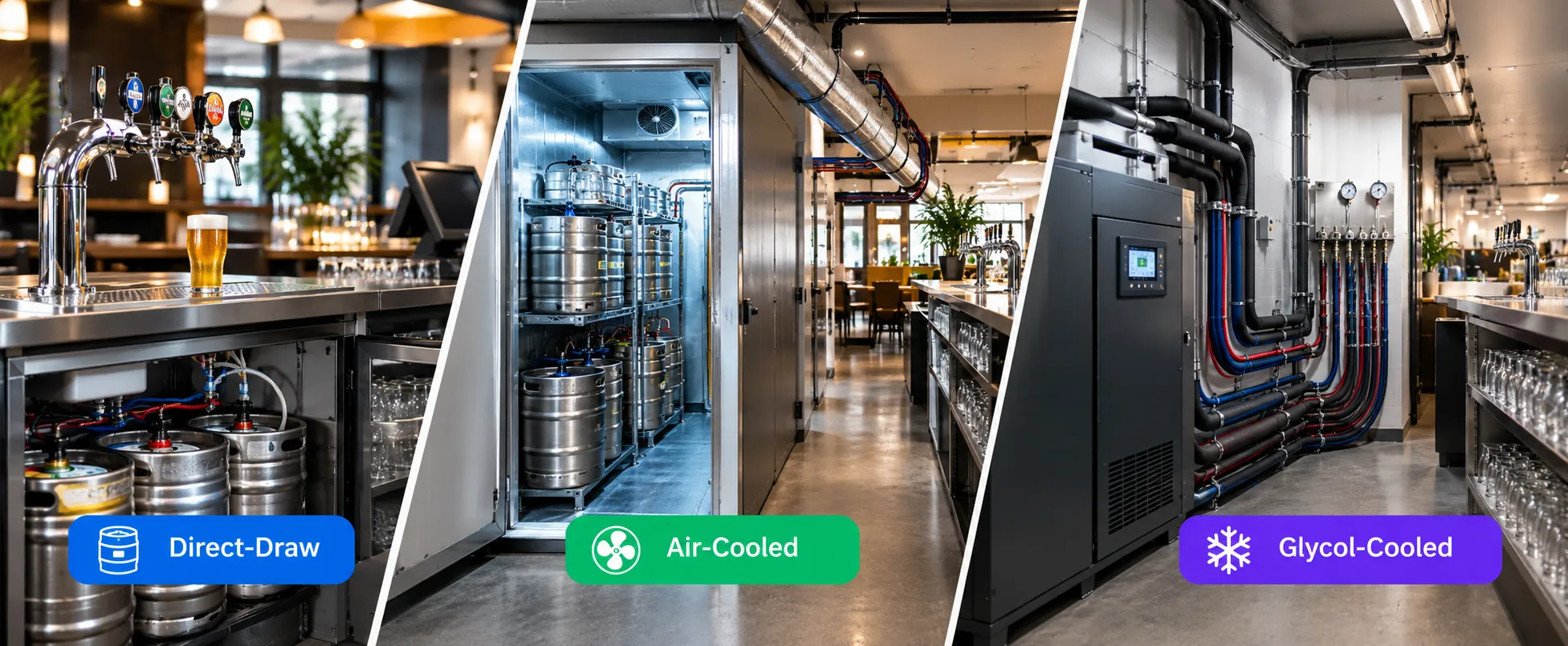
A direct-draw beer system stores kegs close to the dispensing taps, usually inside a refrigerated cabinet beneath the bar. Because the beer travels through relatively short lines, the setup is straightforward and requires less cooling infrastructure than many remote-dispensing systems.
Direct-draw systems are generally affordable to install and relatively easy to maintain. Their compact design makes them suitable for small pubs, restaurants, and bars that serve a limited selection of draught beers. Short beer lines can also reduce the amount of beer held in the lines between pours.
However, the system offers limited flexibility when keg storage needs to be moved away from the bar. Refrigerated cabinet space can also restrict the number of kegs available at one time.
An air-cooled beer system uses cold air from a refrigerated keg room to help maintain beer temperature as the lines travel towards the taps. A blower circulates chilled air through an insulated duct positioned alongside the beer lines.
Air-cooled systems can offer greater flexibility than direct-draw setups without requiring a dedicated glycol chiller. They may suit venues looking for a relatively straightforward way to serve draught beer from a separate refrigerated area.
The main limitation is that cooling performance depends on airflow, insulation, duct design, and line distance. As the route becomes longer, maintaining a consistent temperature can become more difficult. Temperature fluctuations may contribute to foaming and inconsistent pours, particularly during busy service.
A glycol-cooled beer system is designed to maintain beer temperature over longer distances. It uses a chiller to cool a mixture of water and food-grade propylene glycol, which circulates through dedicated cooling lines alongside the beer lines.
These lines are usually grouped into insulated bundles called trunk lines. The cooling mixture helps keep the beer cold as it travels from remote keg storage to the dispensing taps.
Glycol systems provide greater temperature control over long beer lines and can support multiple taps across larger venues. They are commonly used in hotels, large pubs, breweries, and stadiums where the keg room may be far from the bar.
However, installation generally costs more because the system requires a chiller, pumps, insulated trunk lines, and suitable controls. Regular maintenance is also necessary to keep the equipment operating correctly.
A glycol system does not automatically prevent every pouring problem. Incorrect gas pressure, unbalanced beer lines, and poor cleaning practices can still affect beer quality.
These comparisons are general guidelines. Actual costs and performance depend on the equipment, installation design, number of taps, and distance between the keg room and dispensing points.
Start by measuring the distance from the refrigerated keg storage area to the taps. Direct-draw is often suitable when the kegs fit beneath the bar. Air cooling may work when the cooler is nearby, while glycol cooling is generally worth considering for longer dispensing routes.
A small restaurant with a few draught options may not need an elaborate installation. A busy pub with several taps and high customer demand needs a system that maintains consistent temperatures throughout service. Consider future expansion, too, so your setup can accommodate additional taps if your requirements change.
Regardless of the system you choose, maintaining the correct beer temperature is essential. Warm beer can release carbon dioxide more readily, creating excess foam and making pours inconsistent. Temperature changes along the beer lines can also affect the customer experience.
If excessive foam develops, cooling may not be the only issue. Dirty beer lines, incorrect pressure, and poorly balanced equipment can also contribute. Identifying the cause early can help reduce wasted beer and service interruptions.
Choosing between glycol, air-cooled, and direct-draw beer systems depends on your venue’s layout, budget, serving volume, and cooling needs. Direct-draw systems suit smaller bars, air-cooled systems work well for shorter remote lines, and glycol systems offer better temperature control over longer distances.